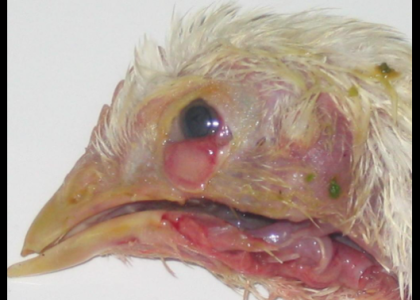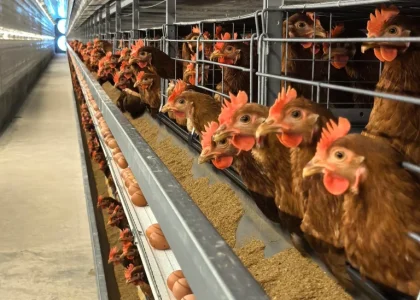


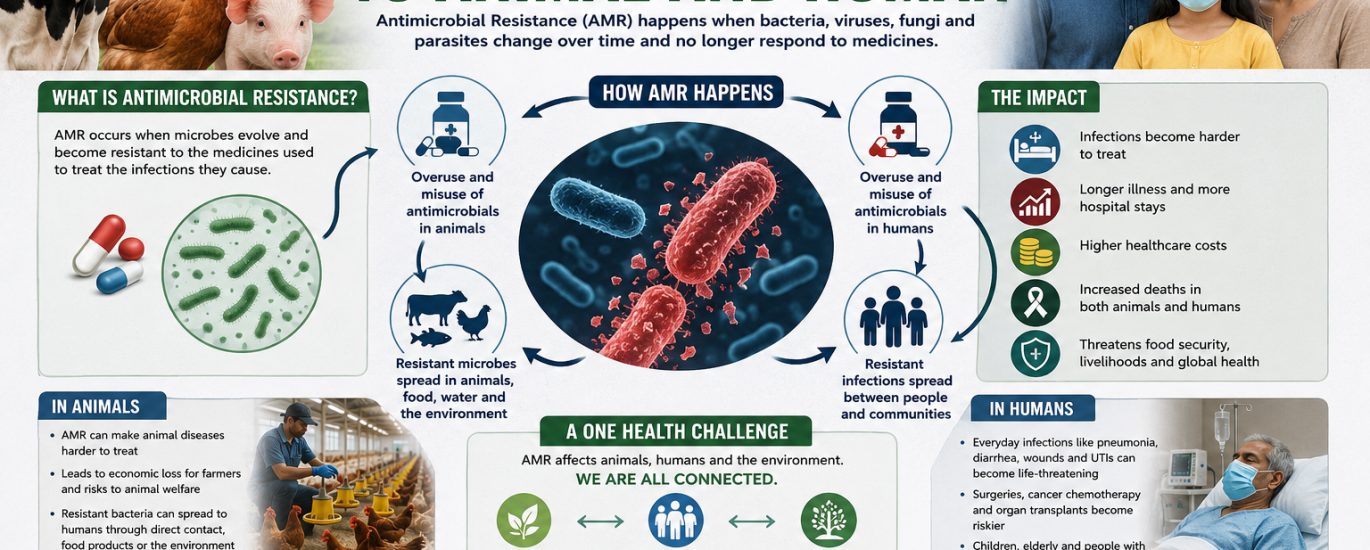
Antimicrobial Resistance Is a Growing Threat to Animal and Human . It affects humans , animals, agriculture, food production, and all over the environment. Antibiotics and others antimicrobial medicine lose their effectiveness and become more difficult to treat .
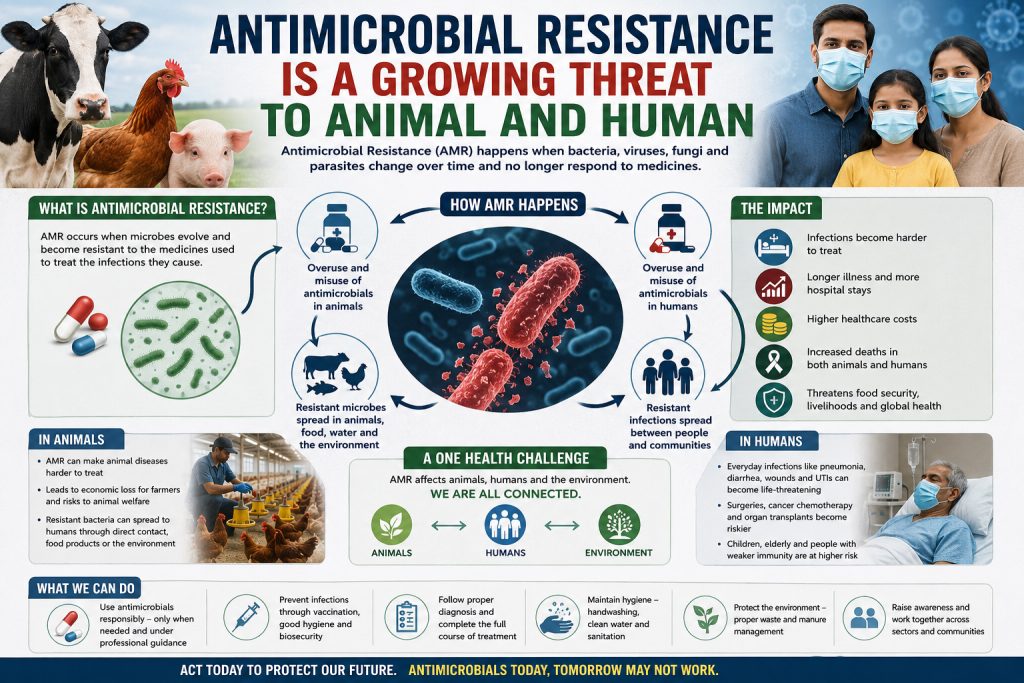
What Is Antimicrobial Resistance?
Antimicrobial resistance occurs when bacteria, viruses, fungi, or parasites evolve and become resistant to medicines that once killed or controlled them. Among these, antibiotic resistance in bacteria is currently the greatest concern in animal production.
When bacteria become resistant, antibiotics no longer work effectively, making infections harder and more expensive to treat.
Why Is Antimicrobial Resistance a Global Concern?
According to global health organizations, antimicrobial resistance threatens decades of medical and veterinary progress. Resistant bacteria can spread:
- Between animals
- From animals to humans
- From humans to animals
- Through food products
- Through water and the environment
This interconnected approach is known as One Health, recognizing that human, animal, and environmental health are closely linked.
How Does Antimicrobial Resistance Develop?
AMR develops naturally over time, but misuse and overuse of antibiotics greatly accelerate the process.
Common causes include:
- Using antibiotics without veterinary diagnosis
- Treating viral diseases with antibiotics
- Incorrect dosage or treatment duration
- Using antibiotics as routine growth promoters where prohibited
- Poor farm biosecurity and hygiene
- Failure to complete the recommended treatment course
Every unnecessary exposure gives bacteria another opportunity to develop resistance.
Impact on Animal Health
Antimicrobial resistance can have serious consequences for livestock and poultry production.
These include:
- Increased disease outbreaks
- Higher mortality rates
- Reduced growth performance
- Poor feed conversion efficiency
- Increased veterinary costs
- Greater production losses
Farmers may eventually find that commonly used antibiotics no longer provide effective treatment.
Impact on Human Health
Resistant bacteria originating from animals can reach people through several pathways, including contaminated food, direct animal contact, and environmental contamination.
Possible consequences include:
- Longer illness duration
- More difficult medical treatment
- Increased hospitalization
- Higher healthcare costs
- Increased risk of death from resistant infections
Protecting animal health is therefore an important part of protecting public health.
Responsible Antibiotic Use in Poultry and Livestock
Farmers can significantly reduce antimicrobial resistance by following good management practices.
1. Use Antibiotics Only Under Veterinary Guidance
Never administer antibiotics simply because birds or animals appear sick. Accurate diagnosis ensures the correct medicine is used only when necessary.
2. Improve Biosecurity
Prevent disease before it occurs by:
- Limiting visitor access
- Cleaning and disinfecting equipment
- Controlling rodents and insects
- Isolating sick animals
3. Follow Vaccination Programs
Vaccination reduces disease incidence and minimizes the need for antibiotic treatment.
4. Maintain Good Nutrition
Balanced feed and clean drinking water strengthen immunity and reduce disease susceptibility.
5. Observe Withdrawal Periods
Always follow the recommended withdrawal period before selling meat, milk, or eggs to ensure food safety.
6. Keep Treatment Records
Maintain accurate records of:
- Disease diagnosis
- Medicine used
- Dosage
- Treatment dates
- Withdrawal period
Proper documentation supports responsible farm management.
Alternatives to Routine Antibiotic Use
Modern animal production increasingly focuses on disease prevention rather than routine antibiotic use.
Helpful strategies include:
- Vaccination
- Improved housing
- Better ventilation
- Clean water systems
- Quality nutrition
- Biosecurity programs
- Regular veterinary health monitoring
These measures improve productivity while reducing dependence on antibiotics.
The Role of Farmers
Every farmer plays a critical role in slowing antimicrobial resistance.
Responsible farming practices include:
- Prevent disease rather than treat it.
- Never use antibiotics without professional advice.
- Purchase medicines from licensed veterinary suppliers.
- Complete prescribed treatment courses.
- Avoid sharing leftover antibiotics between animals.
- Educate farm workers about responsible medicine use.
Small improvements on individual farms can collectively make a significant global impact.
- antimicrobial resistance
- AMR in poultry
- antibiotic resistance in livestock
- responsible antibiotic use
- poultry antibiotics
- antimicrobial stewardship
- One Health
- animal health
- livestock disease prevention
- veterinary antibiotics