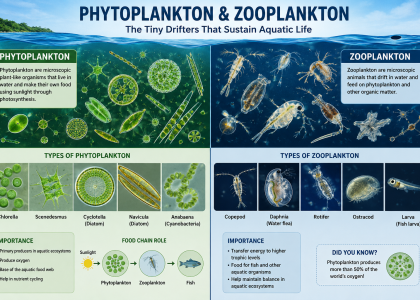


Protein – most important nutrient in fish feed. It supports muscle development, improves growth, improve immune system, and increases survival rates. Whether you cultivate tilapia, carp, catfish, trout, or ornamental fish, selecting high-quality protein sources is essential for achieving the best production results.
Why Protein Is Important for Fish
Fish require protein to:
- Build muscles and body tissues
- Repair damaged cells
- Support healthy growth
- Improve feed conversion ratio (FCR)
- Increase disease resistance
- Enhance reproduction and overall performance
Young fish generally need more protein than adult fish because they grow rapidly.
Animal-Based Protein Sources
1. Fish Meal
Fish meal is widely considered the gold standard for fish feed protein.
Crude Protein: 60–72%
Benefits:
- Highly digestible
- Excellent amino acid profile
- Rich in omega-3 fatty acids
- Improves growth and feed efficiency
- Highly palatable
Limitations:
- Expensive
- Price fluctuates due to global supply
2. Shrimp Meal
Shrimp meal is made from shrimp processing waste.
Protein: 40–55%
Benefits:
- Natural feeding stimulant
- Rich in minerals
- Contains carotenoids that improve fish coloration
3. Blood Meal
Blood meal contains very high protein levels.
Protein: 80–90%
Advantages:
- Excellent protein concentration
- Good source of lysine
Disadvantages:
- Poor palatability
- Low methionine
- Should be used in limited amounts
4. Poultry By-Product Meal
Made from processed poultry by-products.
Protein: 55–65%
Benefits:
- Cost-effective
- High digestibility
- Good alternative to fish meal
Plant-Based Protein Sources
1. Soybean Meal
Soybean meal is the most widely used plant protein in aquaculture.
Protein: 44–48%
Advantages:
- Affordable
- Good amino acid profile
- Easily available worldwide
Limitations:
- Contains anti-nutritional factors unless properly processed
2. Corn Gluten Meal
Protein: 60–65%
Benefits include:
- High protein content
- Good digestibility
- Long shelf life
3. Canola Meal
Protein: 35–40%
Advantages:
- Affordable
- Good protein source
- Works well when combined with soybean meal
4. Pea Protein
Pea protein has become increasingly popular.
Benefits:
- Highly digestible
- Sustainable
- Suitable for reducing fish meal usage
Sustainable Protein Sources
Insect Meal
Black Soldier Fly larvae meal is gaining popularity worldwide.
Protein: 40–60%
Benefits:
- Environmentally friendly
- Excellent amino acid profile
- Sustainable production
- Good feed conversion
Single Cell Protein
Produced from yeast, bacteria, algae, or fungi.
Advantages:
- Sustainable
- Consistent quality
- Requires less land and water
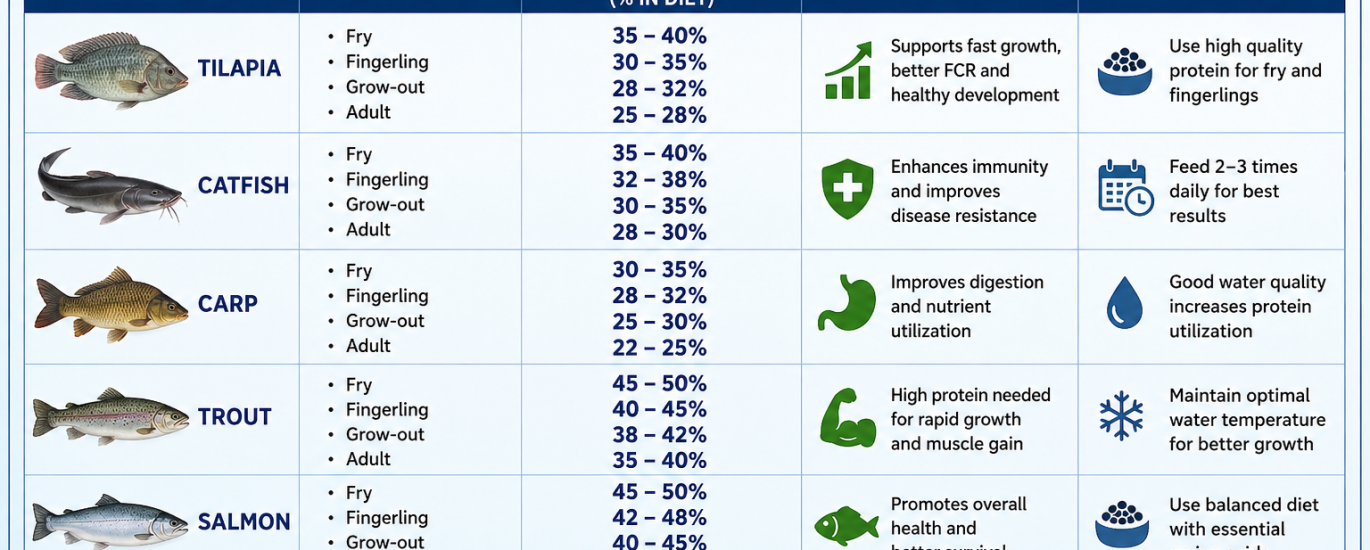
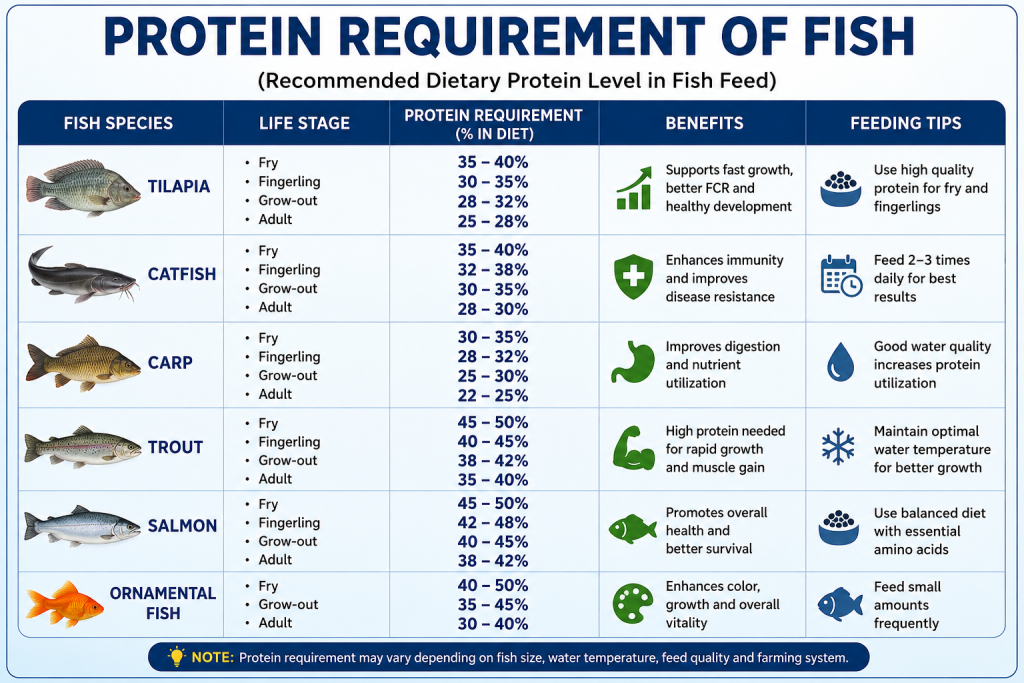
Protein Requirement by Fish Species
How to Choose the Best Protein Source
Consider the following factors:
- Protein quality
- Amino acid balance
- Digestibility
- Availability
- Cost
- Sustainability
- Fish species
- Growth stage
Using a combination of animal and plant proteins often provides the best results while reducing feed costs.
Common Mistakes to Avoid
- Using only one protein source
- Ignoring amino acid balance
- Purchasing poor-quality ingredients
- Feeding excessive protein
- Not adjusting protein levels based on fish age
Conclusion
Successful fish farming good quality protein is essential . While fish meal remains the premium choice, combining soybean meal, poultry by-product meal, corn gluten meal, and emerging ingredients like insect meal can produce excellent growth at a lower cost . Selecting high-quality ingredients and balancing amino acids will improve fish health , feed efficiency, and farm profitability.
By understanding the strengths of each protein source, fish farmers can formulate cost-effective feeds that support healthy and sustainable aquaculture production.