

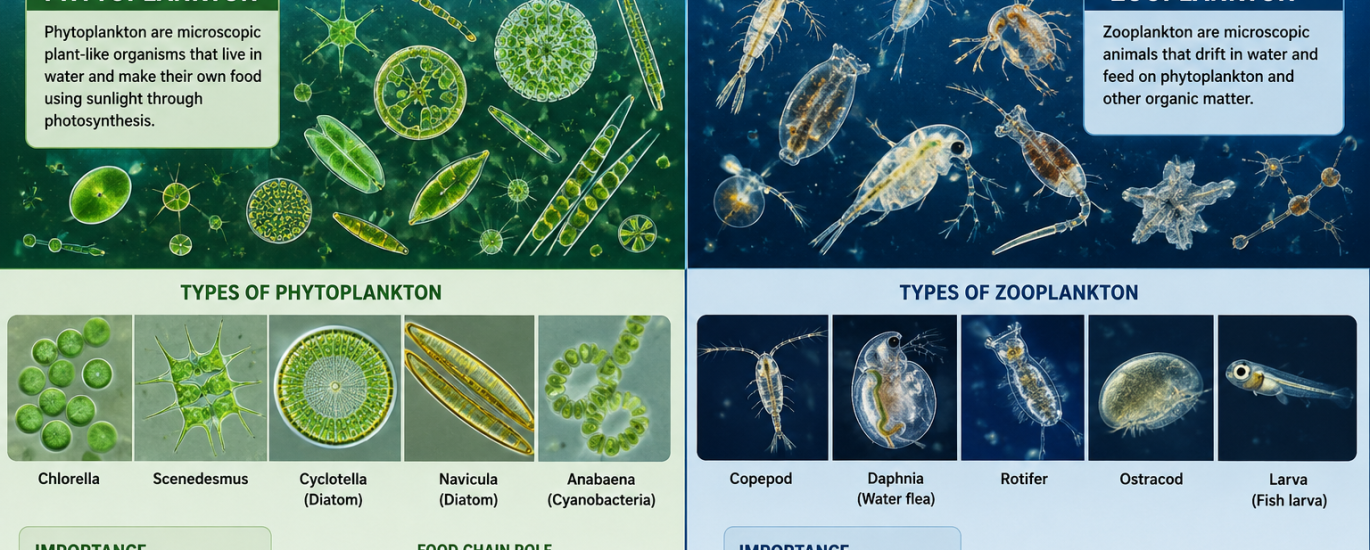
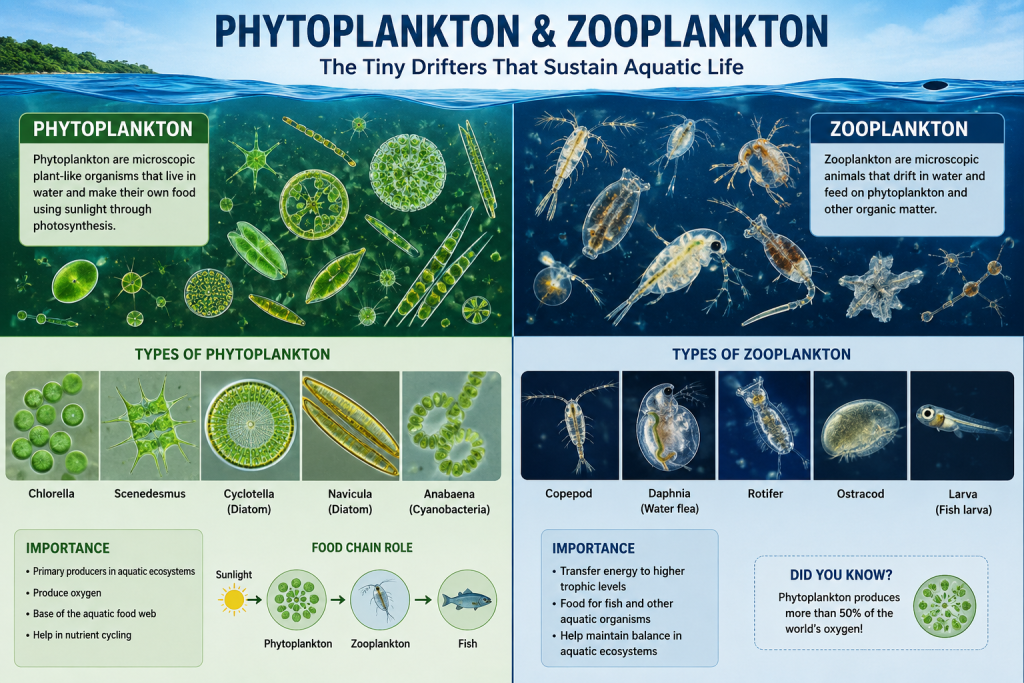
Phytoplankton and zooplankton (tiny aquatic animals) in a culture pond is essential for fish , shrimp, and many freshwater species. By this method you can Produce Phytoplankton & zooplankton in your pond.
Step 1: Pond Preparation
Proper fish farm pond preparation is one of the most important steps for successful fish farming. A well-prepared pond creates a healthy environment, improves natural food production, reduces disease risks, and helps fish grow faster.
* Drain and Dry the Pond
- Completely drain the pond if possible.
- Remove unwanted fish, predators, and aquatic animals.
- Allow the pond bottom to dry for several days.
- Drying helps reduce harmful organisms and improves soil condition.
* Remove Excess Mud
Remove excessive black, foul-smelling sludge from the pond bottom. A moderate layer of nutrient-rich soil can be retained, but too much organic sludge can reduce water quality.
* Repair the Pond
- Pond banks and slopes
- Inlet and outlet pipes
- Screens or nets
- Leaks and damaged areas
Make sure unwanted fish cannot enter through the water inlet.
Step 2: Apply Lime
Lime improves water quality and nutrient availability & Soil pH
Agricultural Lime (kg/ha)
Below 5.5
2,000–3,000
Below 5.5–6.5
1,000–2,000
Above 6.5
500–1,000
After lime, Wait 2–3 days.
Step 3: Fertilize the Pond
Organic fertilizer
Use one of the following:
Cow manure: 2,000–3,000 kg/ha
Poultry manure: 1,000–2,000 kg/ha
Inorganic fertilizer
Urea: 25–50 kg/ha
TSP : 25–50 kg/ha
These nutrients promote phytoplankton growth.
Step 4: Fill the Pond with clean, filtered water.
Initial depth: 80–100 cm
Avoid muddy or polluted water.
Step 5: Wait 5-10 Days
Within 5–10 days, the water should turn:
Light green
Olive green
This indicates healthy phytoplankton growth.
Avoid dark green, brown, or black water, as these may indicate excessive blooms or poor water quality.
Step 6: Zooplankton
Zooplankton naturally increase after phytoplankton become abundant.
To boost them:
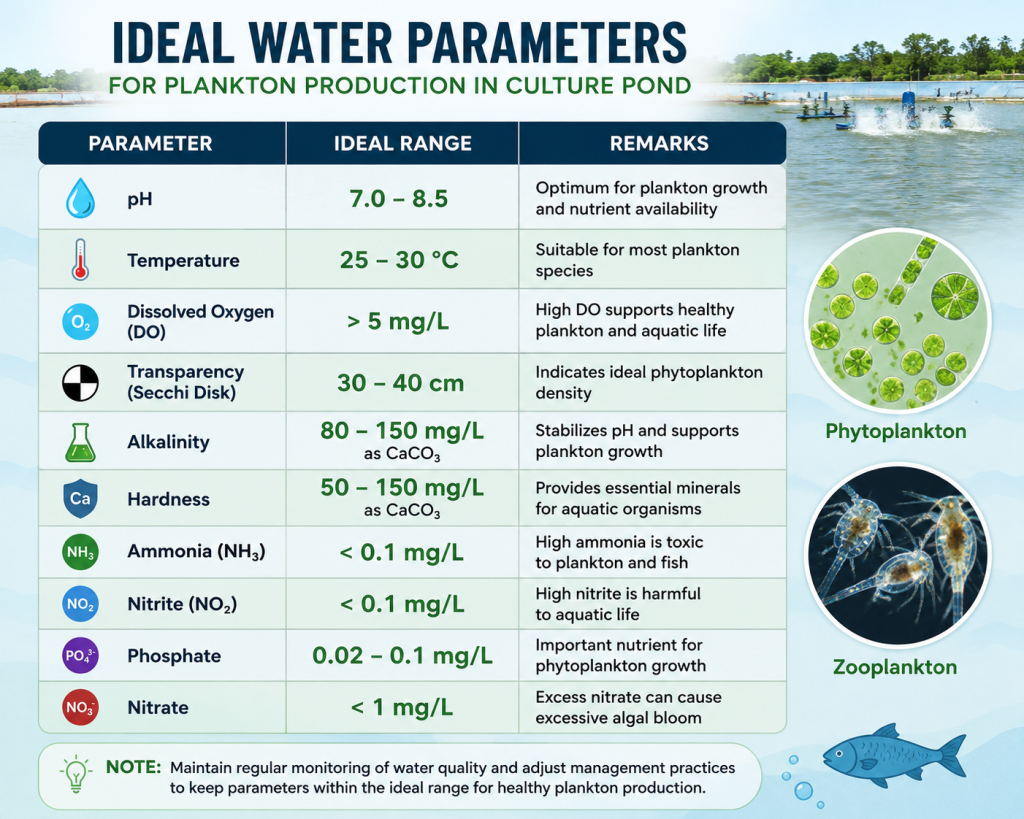
Maintain dissolved oxygen above 5 mg/L.
Avoid pesticides and harmful chemicals.
Continue light fertilization every 1–2 weeks if the water becomes too clear.
Ideal Water Parameters
Signs of a Healthy Pond
1. Light green water.
2.Tiny zooplankton visible when examining a 3. water sample.
4.Fish fry actively feeding.
5. No foul smell.