

1. Tube Feeder
- Most common for backyard and small commercial farms.
- Feed is stored in a tube and flows into a circular tray.
- Best for:
- Broilers and layers in small to medium flocks.
- Advantages:
- Easy to refill , portable , reduces feed contamination.

2. Trough Feeder
- A long, open feeding trough made of plastic or metal.
- Birds feed from both sides.
- Best for:
- Chicks, growers, and breeders.
- Advantages:
- Simple design, inexpensive, easy to clean.

3. Automatic Pan Feeder
- Feed is delivered automatically through a conveyor line into round pans.
- Widely used in modern broiler farms.
- Best for:
- Large commercial broiler operations.
- Advantages:
- Saves labor, ensures uniform feed distribution, reduces waste.
4. Chain Feeder
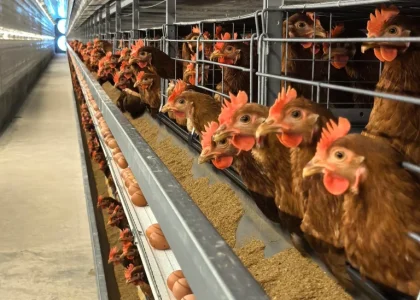
- A moving chain transports feed continuously around the poultry house.
- Common in commercial layer farms.
- Best for:
- Cage layer systems.
- Advantages:
- Uniform feeding and suitable for large flocks.
5. Bell Feeder
- Small circular feeder designed for day-old chicks.
- Usually placed on the floor during brooding.
- Best for:
- Chicks from 0–2 weeks.
- Advantages:
- Easy access for young birds and minimizes feed spillage.
6. Automatic Feeder
- Feed is supplied automatically to long troughs.
- Used in some breeder and layer houses.
- Best for:
- Commercial layer and breeder farms.
- Advantages:
- Consistent feed delivery with minimal labor.
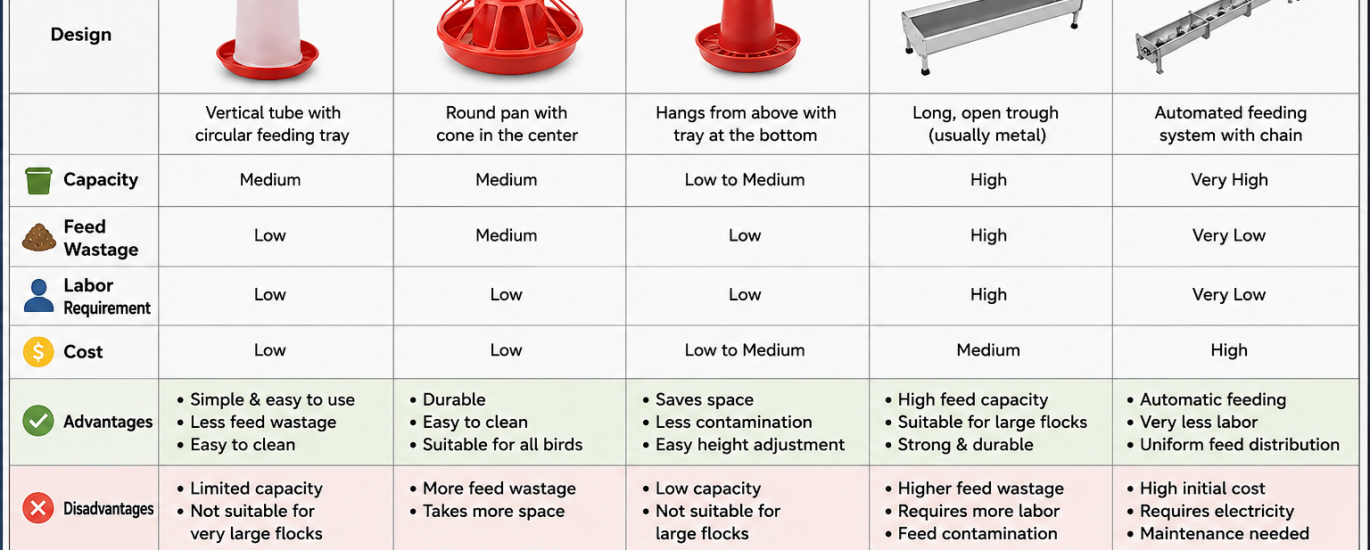
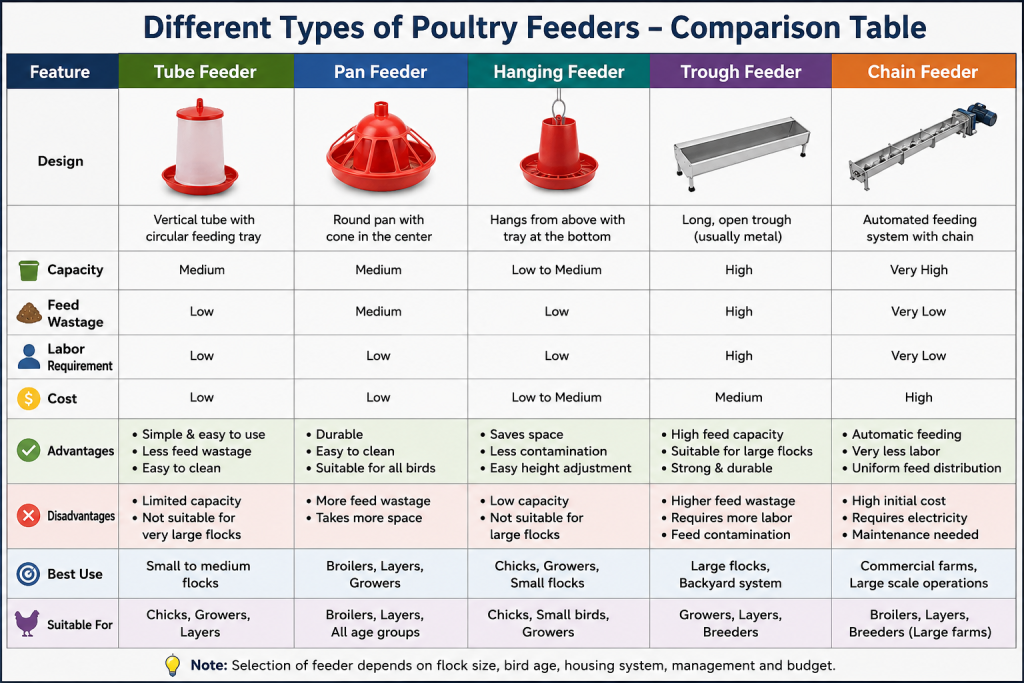
Comparison Table
Tips for Choosing a Feeder
- Backyard flocks (10–100 birds): Tube feeders or trough feeders.
- Broiler farms (1,000+ birds): Automatic pan feeders.
- Commercial layer farms: Chain or linear automatic feeding systems.
- Chick brooding: Bell feeders for the first 1–2 weeks.
Using the correct feeder type helps reduce feed wastage, improve feed conversion ratio (FCR), and support healthier, more uniform flock performance.